A Rare Fasciated Firespike at Our Clermont Nursery
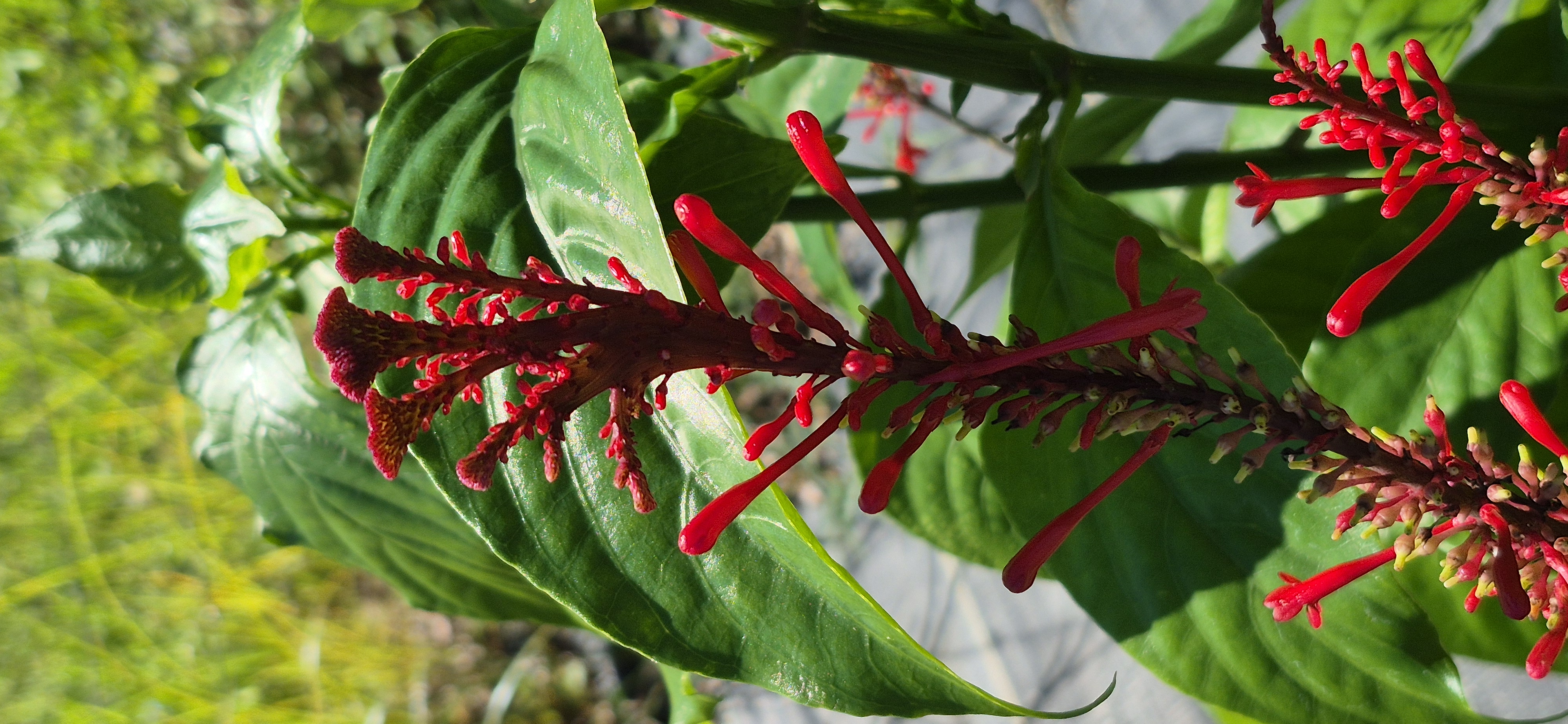
Every so often a plant does something it is not supposed to do. This fall one of our firespikes did exactly that, and it is sitting on the bench at the nursery for anyone who wants to see it.
What firespike is
Firespike (Odontonema cuspidatum, often sold as Odontonema strictum) is one of the most reliable fall and winter bloomers we grow for Central Florida. It is a soft-wooded shrub that reaches four to six feet, with glossy dark green leaves and tall spikes of tubular red flowers from about October through the cooler months. Hummingbirds work the flowers all day, and butterflies, especially sulphurs and swallowtails, follow them.
It handles our sandy Lake County soil, takes part shade or filtered sun, and tolerates a light frost. If a hard freeze knocks it back it almost always returns from the roots in spring. That mix of toughness and color is why we use it along fences, under oaks and at the back of butterfly beds in Clermont, Minneola and Groveland yards.
What happened to this one
The plant on our bench has a stem that stopped growing as a round shoot and instead flattened and widened into a ribbon-like crest, with the flower buds crowded along the top edge. Botanists call this fasciation, from the Latin for "band." It is the same thing that produces crested cacti and the flattened cockscomb celosia you see in fall displays.
Fasciation happens when the growing tip of a shoot, which normally stays a single point, spreads out into a line of growing cells. Nobody can point to one cause. It has been linked to a genetic change in that one shoot, to hormone imbalances, to insect or frost damage at the tip, and to a soil bacterium, Rhodococcus fascians. It does not spread from plant to plant in a garden, it does not harm the plant, and it is not something you can order. On firespike it is rare enough that in more than two decades of growing them this is the first we have had.
The crest may keep growing this way for years, or the plant may revert and send up normal shoots beside it. Either way it is a conversation piece, and the flowers on it are just as good for the hummingbirds.
Growing firespike at home
- Light: partial shade to filtered sun. Full afternoon sun in July will scorch the leaves.
- Water: regular water the first season, then it is fairly drought tolerant once established. Mulch helps.
- Size and spacing: four to six feet tall and about as wide. Plant three to four feet apart for a hedge.
- Pruning: cut it back by a third in late winter after the bloom finishes, or hard to the ground after a freeze.
- Fertilizer: a slow-release shrub fertilizer in March and again in late summer is plenty.
- Wildlife: hummingbirds, butterflies and bees. Deer mostly leave it alone.
Come see it
The fasciated firespike, and plenty of ordinary ones ready to plant, are at Highland Grove Nursery, 20525 County Road 561, Clermont. We are open 8:30 to 4, Monday through Saturday. Call the nursery at (321) 299-6834 if you want to make sure it is still here before you drive over. If you want firespike worked into a planting plan, our landscaping crew can design and install it along with the rest of your bed.